- Choosing the right solar mounting option for your estate
- A practical comparison for public sector sites
- Solar carports turn parking areas into clean energy assets
- Ground-mounted solar to maximise generation where land is available
- On-roof solar to use existing buildings for efficient generation
- Which option is best?
- Product features and project support
- Pricing and value
- Build a stronger business case for solar
- Contact us to discuss your solar project
Choosing the right solar mounting option for your estate
Public sector organisations are under pressure to reduce energy costs and cut carbon emissions in line with government net zero targets. Solar PV is one of the most practical and cheap ways to support those goals, but the success of a project often starts with choosing the right mounting approach.
For councils, NHS sites, schools, universities, leisure centres, emergency services, transport hubs and other public estates, the three main options are solar carport systems installed above parking areas, ground-mounted solar arrays installed on available land, and on-roof solar installed on existing buildings.
Each option delivers free, clean electricity, but they differ in cost, planning requirements, available space, visual impact, disruption, and long-term value. The best choice is the option that fits your site, budget, funding route, and operational priorities.
Our team models each option to help public sector teams make confident, evidence-led decisions before moving into design, procurement and installation.
A practical comparison for public sector sites
A public sector solar project is rarely just about generating electricity. It may also need to support carbon reduction plans, energy resilience, fleet electrification, community leadership, estate optimisation, and responsible use of public funds.
That is why comparing a solar carport, ground-mounted solar and on-roof solar should start with your site objectives.
As you compare options, consider whether you have unused roof space, car parks, or land; whether your electrical demand is highest during daylight hours; whether you are planning to install EV charging; whether roofs are structurally suitable and in good condition; whether land can be used without affecting future development plans; how big the solar system needs to be; and how the project is likely to be funded.
The right mounting type should be clear after these questions are answered.
Solar carports turn parking areas into clean energy assets
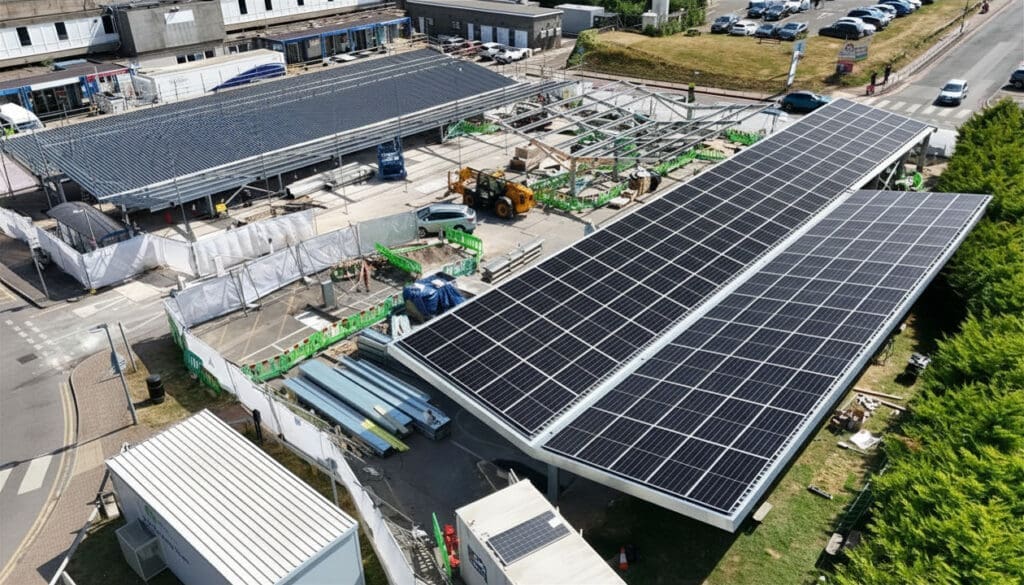
A solar carport is a canopy structure fitted with solar PV panels above parking spaces. Instead of using roof space or undeveloped land, it transforms existing car parks into productive energy-generating assets.
For public sector organisations, this can be especially valuable because car parks are often large, visible, and close to buildings with significant daytime electricity demand.
Key benefits of solar carports
Solar carports are ideal where an organisation wants to generate renewable electricity while also improving the function of its parking areas. They can generate clean power on land that is already developed, provide covered parking for elderly and vulnerable visitors, support EV charging infrastructure, avoid pressure on roof structures, and make better use of large car parks across an estate.
A solar carport can also be a strong option where roof space is limited, shaded, unsuitable, or already in use by other plant and equipment.
For organisations planning fleet electrification, a carport can be particularly compelling. Solar generation, EV charging, and battery storage can be considered together, helping to create a more integrated energy strategy. EV chargers can run using solar generated energy, giving the organisation the option to charge and collect a profit from EV charging, or give it away for free to staff as a work perk.
Funding considerations for solar carports
Solar carports usually involve higher upfront costs than on-roof solar because they require a purpose-built supporting structure, groundwork, foundations, and civil works. They can also involve more detailed design around vehicle movement, drainage, lighting, safety and accessibility.
However, the additional investment may be justified where the project delivers multiple benefits, not just electricity generation. For example, a solar carport may contribute to carbon reduction targets, EV charging plans, improved visitor and staff facilities, better use of existing public assets, visible climate leadership, and long-term operational savings.
For public sector budgets, this broader value can be important. Solar carports may be suitable for capital funding, grant-supported programmes, or fully-funded solar.
If upfront budget is limited, it may be worth assessing whether the project can be phased. For example, an organisation might begin with a priority car park, then expand the system as funding and demand grow.
For a more detailed look at the wider advantages, see our guide: Benefits of Installing a Solar Carport for Businesses.
Ground-mounted solar to maximise generation where land is available
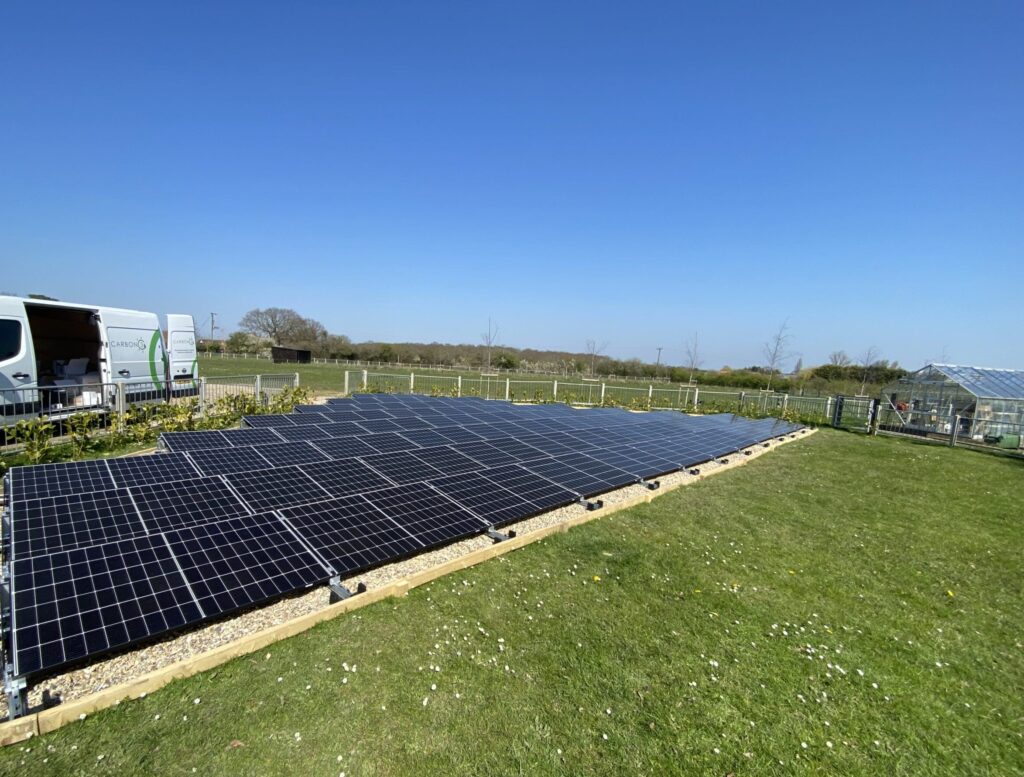
Ground-mounted solar is installed on frames fixed to open land. It is often chosen when an organisation has a larger site, available grounds or low-value land that can be used for renewable energy generation.
This option can be well suited to campuses, depots, water treatment sites, leisure estates, rural public buildings, and other locations with sufficient land close to electrical demand or grid connection points.
Key benefits of ground-mounted solar
Ground-mounted systems can offer excellent design flexibility. Because they are not constrained by roof size, roof angle or building layout, the array can often be positioned for strong solar performance. Some mounting frames are even able to move with the sun to get the most generation possible.
They can deliver larger-scale solar generation where land is available, optimise panel angle and orientation, avoid structural limitations of existing buildings, support high-consumption public sector sites, allow easier access for maintenance compared with some roofs, and expand renewable generation across wider estates.
For organisations with significant daytime energy use, ground-mounted solar can provide a strong route to long-term cost control and carbon reduction.
Funding considerations for ground-mounted solar
Ground-mounted solar can vary significantly in cost depending on site conditions. A straightforward installation on accessible land may be cost-effective, while more complex sites can require additional expenditure for groundworks, fencing, planning, ecology, security, cable routes, and grid connection.
It may be less expensive than a solar carport in some cases because it does not need to function as a parking canopy and thus can be much lower to the ground, requiring less resources for the build.
Public sector organisations should also consider opportunity cost. Land used for solar may not be available for future operational expansion. For this reason, ground-mounted solar is often most suitable where the land has limited alternative use or where energy generation is a strategic priority.
Funding models may include capital investment, Great British Energy funding, or fully-funded solar, depending on eligibility and project structure. A robust feasibility study is essential before committing budget.
On-roof solar to use existing buildings for efficient generation
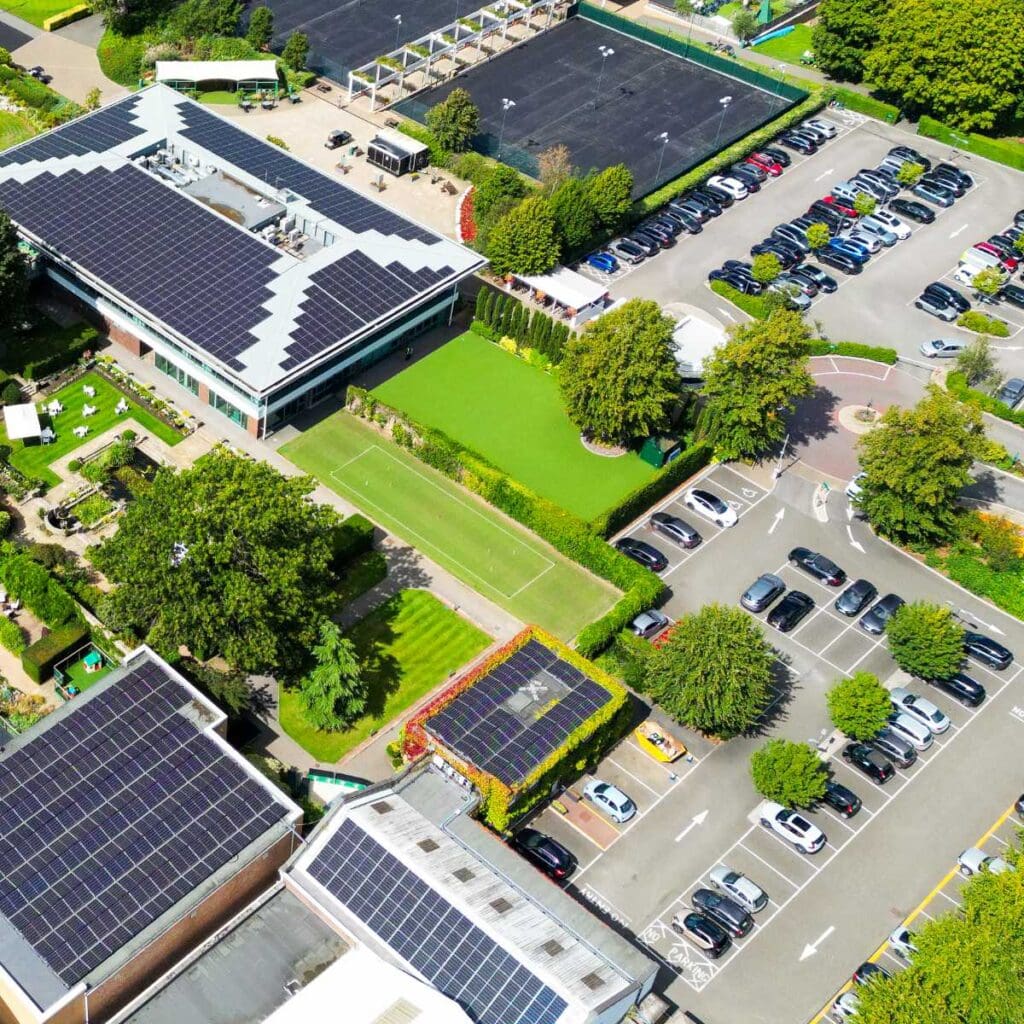
On-roof solar is often the first option organisations consider because it uses existing building space and can be one of the most cost-efficient ways to install solar PV.
For public sector estates with suitable roofs, this can be an excellent starting point. Schools, offices, hospitals, libraries, leisure centres, and civic buildings may all have roof areas that can support solar panels.
Key benefits of on-roof solar
On-roof solar is attractive because it typically makes use of space that is otherwise underused. It can generate renewable electricity without using car parks or land, keep installation costs lower than more structural options in many cases, while minimising visual impact at ground level.
Where roof condition, orientation, and structure are favourable, on-roof solar can offer a strong balance of cost and performance.
Funding considerations for on-roof solar
On-roof solar is often the most affordable of the three options because the building provides the main support structure. That can make it easier to justify through capital budgets.
However, public sector organisations should avoid assuming that every roof is suitable. Before installing, the roof must be assessed for structural capacity, remaining roof lifespan, shading from nearby buildings or trees, access for installation and maintenance, fire safety considerations, existing plant and roof penetrations (such as vents or skylights), and planning or heritage constraints.
If a roof requires repair or replacement soon, it may be better to coordinate solar installation with roofing works. Installing panels on a roof that needs major maintenance in the near future can create avoidable costs later.
On-roof solar can be an excellent first phase for organisations with constrained budgets, but it may not deliver enough generation if roof space is limited or shaded, or electrical demand is higher than the system the roof space permits.
Which option is best?
There is no single best option for every public sector organisation. The right choice depends on your estate, energy profile, funding route, and long-term plans.
A solar carport may be best when you have large parking areas, you want to combine solar PV with EV charging, your roofs are unsuitable or already occupied, and you can justify a higher investment through multiple benefits.
Ground-mounted solar may be best when you have available land with limited alternative use, you need larger generation capacity, and land use, planning, ecology and grid connection considerations can be managed.
On-roof solar may be best when you have suitable roofs in good condition, you want a cost-effective installation, and you need to avoid using land or car parking areas.
In many cases, the best solution is a combination. A public sector estate might install on-roof solar first, add solar carports to support EV charging, and use ground-mounted solar for larger sites with available land.
Product features and project support
Our solar mounting solutions can be tailored to your site and procurement needs. Depending on your chosen option, project support may include initial site review, feasibility, demand profile review, mounting type comparison, outline design, budget guidance and funding support, technical surveys, planning and grid connection considerations, and integration with EV charging or battery storage where appropriate.
This approach helps public sector estates teams compare options on more than headline installation cost. It supports better whole-life value, clearer business cases, and more confident stakeholder engagement.
Pricing and value
Pricing depends on the size, mounting type, site conditions, electrical infrastructure, DNO approval, and any additional requirements such as EV charging, battery storage, lighting or monitoring.
As a general guide:
- On-roof solar is often the most cost-effective where roofs are suitable and unshaded.
- Ground-mounted solar can be cost-efficient at scale, and are usually the easiest to maintain, but may require land preparation, planning, and grid support.
- Solar carports are often more expensive upfront but can deliver additional value through covered parking, EV charging readiness, and visible sustainability impact.
For public sector organisations, the strongest business case often looks beyond installation cost. It should consider energy savings, carbon reduction, asset improvement, maintenance, funding availability, stakeholder value, and long-term estate plans.
Build a stronger business case for solar
Whether you are exploring a single building, a car park, a campus or a wider public estate, choosing the right mounting option is the first step towards a successful project.
We can help you compare ground-mounted solar, on-roof solar and solar carport solutions based on your real site conditions, budget, and objectives.
Contact us to discuss your solar project
Ready to assess the best option for your organisation? Contact us today to arrange a consultation. We will help you review your site, understand your funding considerations and identify the solar mounting solution that offers the strongest long-term value for your public sector estate.